

James Sutton - British Sculptor
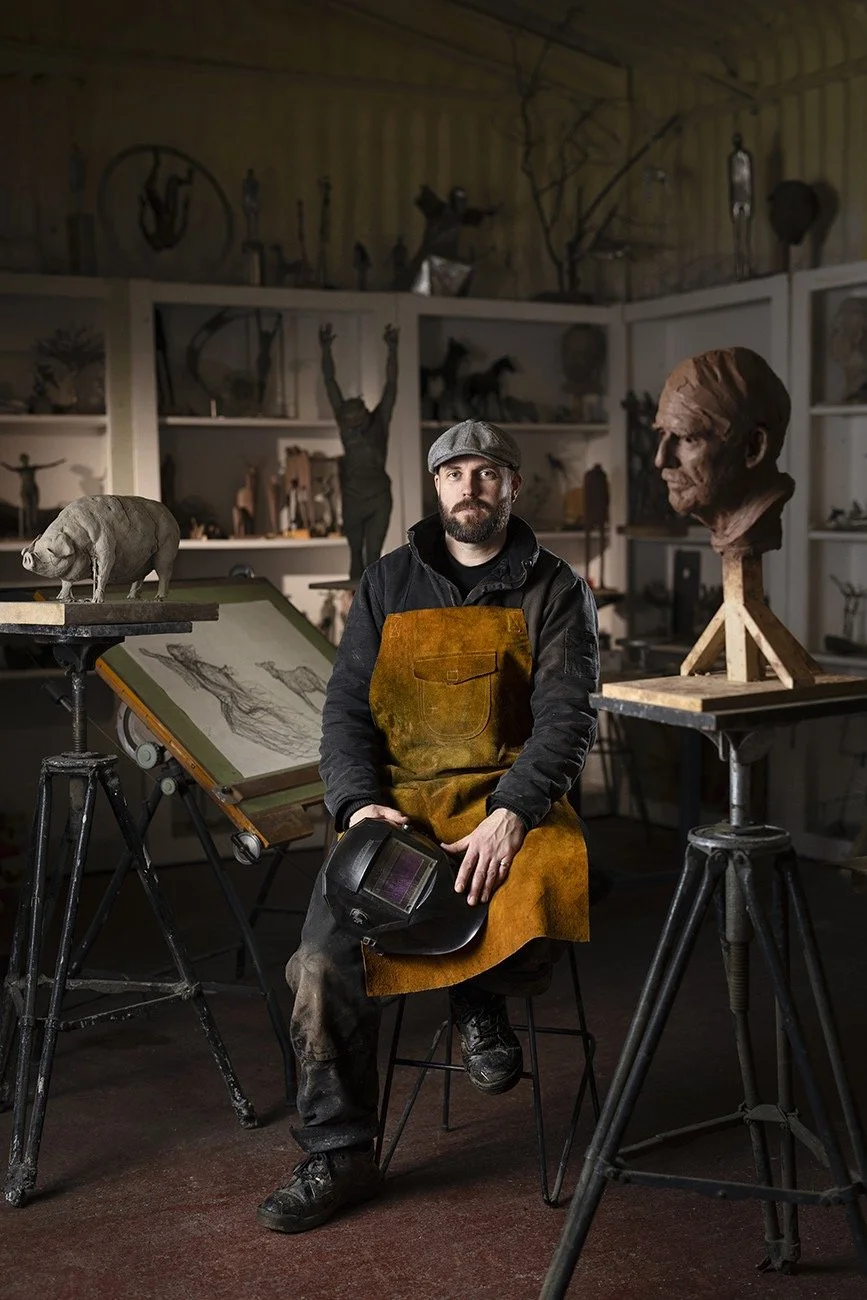
I’m James Sutton, a British sculptor based in Lincolnshire, and I have been creating contemporary sculpture professionally for more than twenty years.
Working primarily in stainless steel, alongside Corten steel, bronze and stone, I create original sculpture for private collectors, gardens, businesses, public spaces and architectural environments.
My work is rooted in the natural world. Movement, changing landscapes, wildlife, erosion and the passing of time regularly find their way into what I make. I am particularly interested in taking materials associated with strength and permanence and using them to create forms that feel organic, fluid and sometimes surprisingly delicate.
Although the projects have grown considerably in scale over the years, the part I value most remains the same: taking an idea, understanding the material and working through the making process until the finished sculpture feels right.
Every piece matters, whether it is a small sculpture for someone's home or a large site-specific commission designed for a public or architectural setting.
How I Became a Sculptor
I grew up on the outskirts of Manchester as one of four children. My dad was a Baptist minister, so family and community were a big part of my childhood, alongside a fascination with wildlife and a constant need to make things.
Being dyslexic, I found some aspects of school difficult. Fortunately, my mum recognised that I was much happier drawing, painting and working with my hands and encouraged me to pursue the things that came naturally.
That eventually led me to study Fine Art and Contemporary Crafts at Lincoln University. I quickly became drawn towards the practical side of sculpture: understanding materials, developing technical skills and learning how good craftsmanship could give an idea permanence.
Studying beside Lincoln Cathedral had a lasting impact on me. Surrounded by stone carving and architecture, I specialised in stone and began working with marble, alabaster and limestone. Sculptors including Barbara Hepworth, Henry Moore and Constantin Brâncuși were important early influences, particularly in the way they simplified natural forms while retaining a strong sense of material and presence.
I graduated in 2005 and began making sculpture from a tiny outhouse in the courtyard of our terraced home. Alongside a part-time job in graphic design, I exhibited wherever I could and gradually built enough commissions to become a full-time sculptor.
I've been doing it ever since.
From Stone to Steel
As my commissions became larger, particularly through public art projects, I began looking beyond stone.
Working with blacksmith Dave Payne at Spitfire Forge introduced me properly to metal fabrication and welding. It opened up an entirely new way of thinking about sculpture.
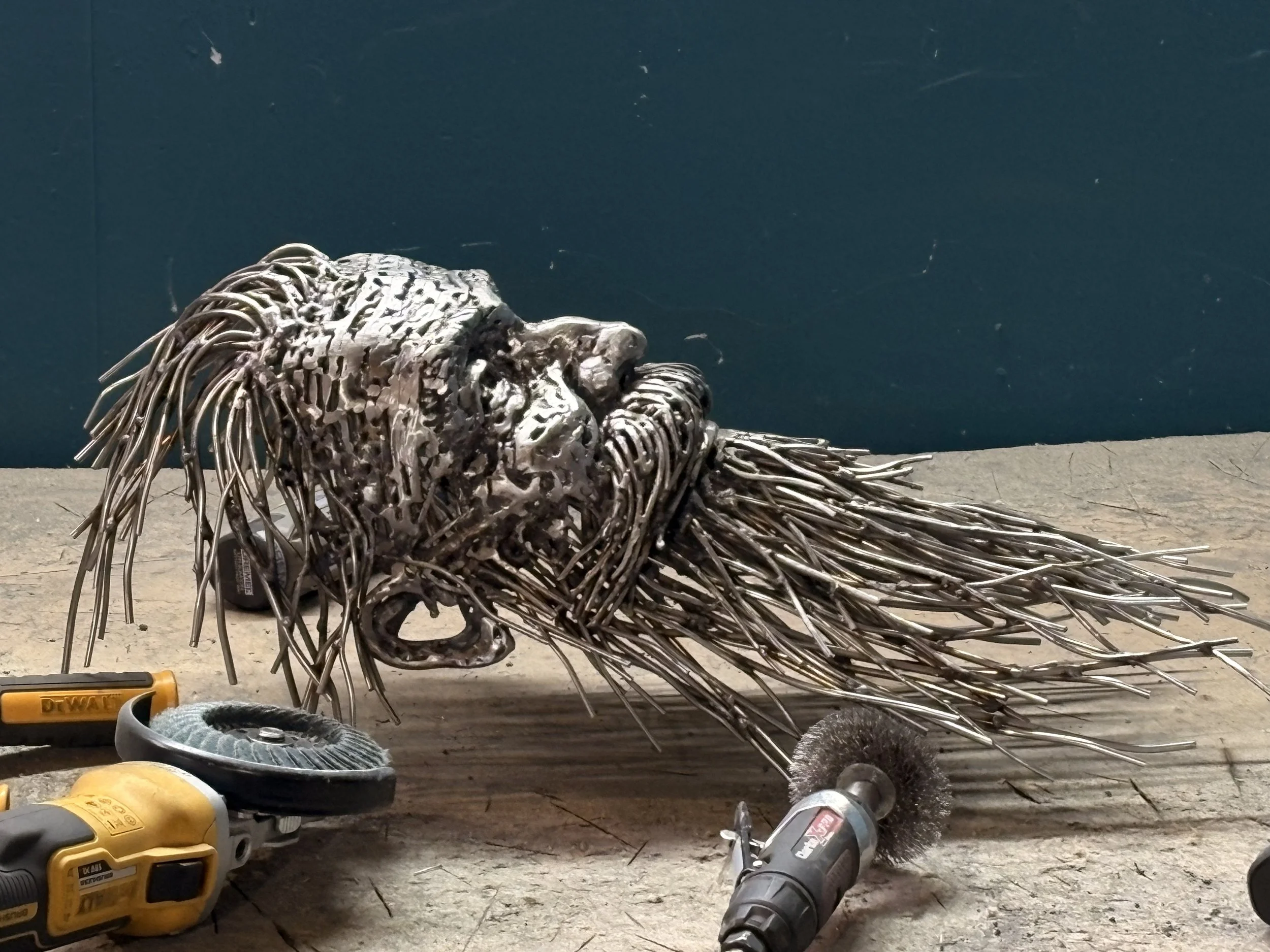
Steel allowed me to work at a different scale, create much lighter and more dynamic forms, and explore movement in ways that weren't possible in stone. Over time, stainless steel became central to my practice, alongside Corten steel, bronze, copper, brass and occasional returns to stone.
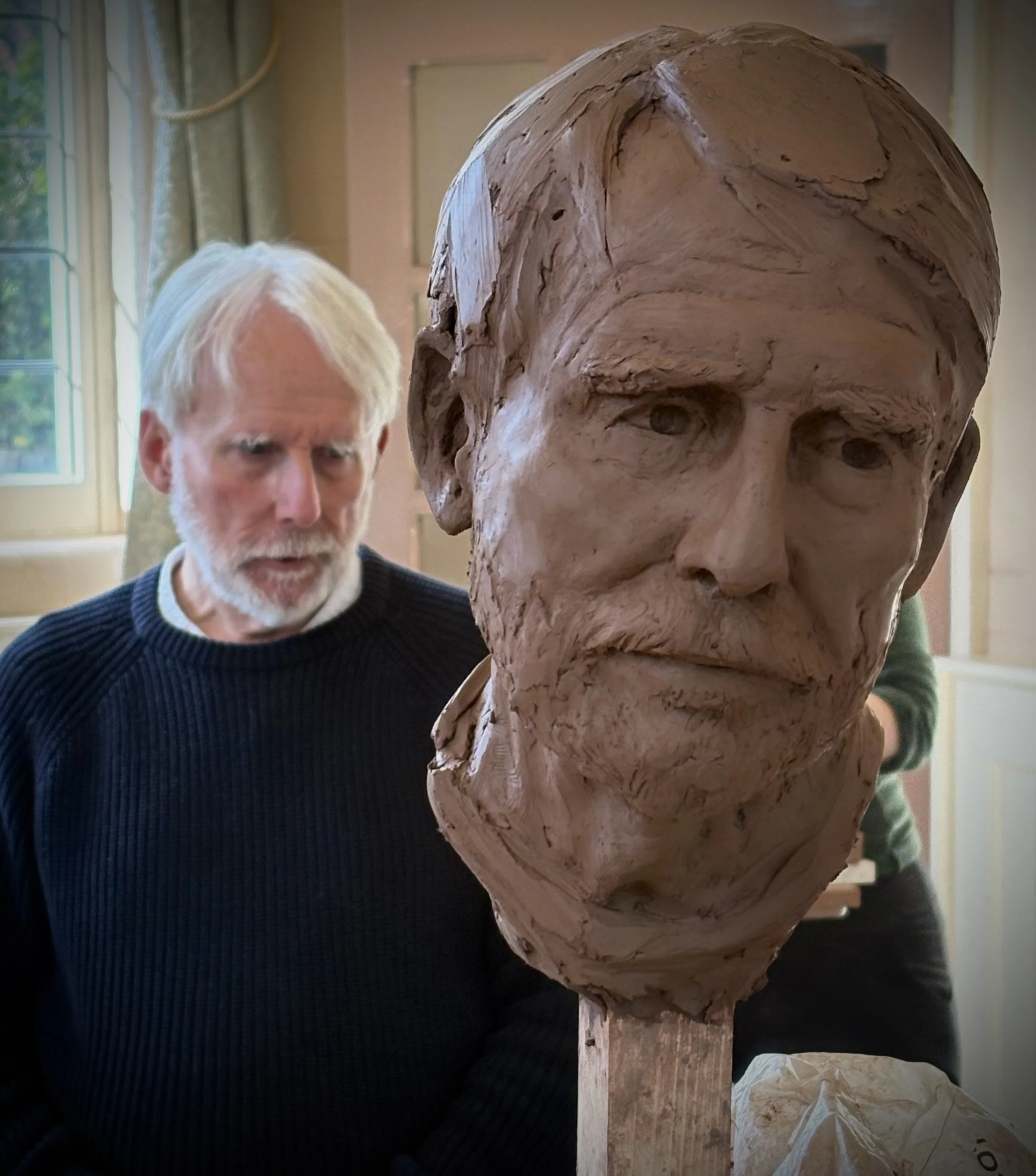
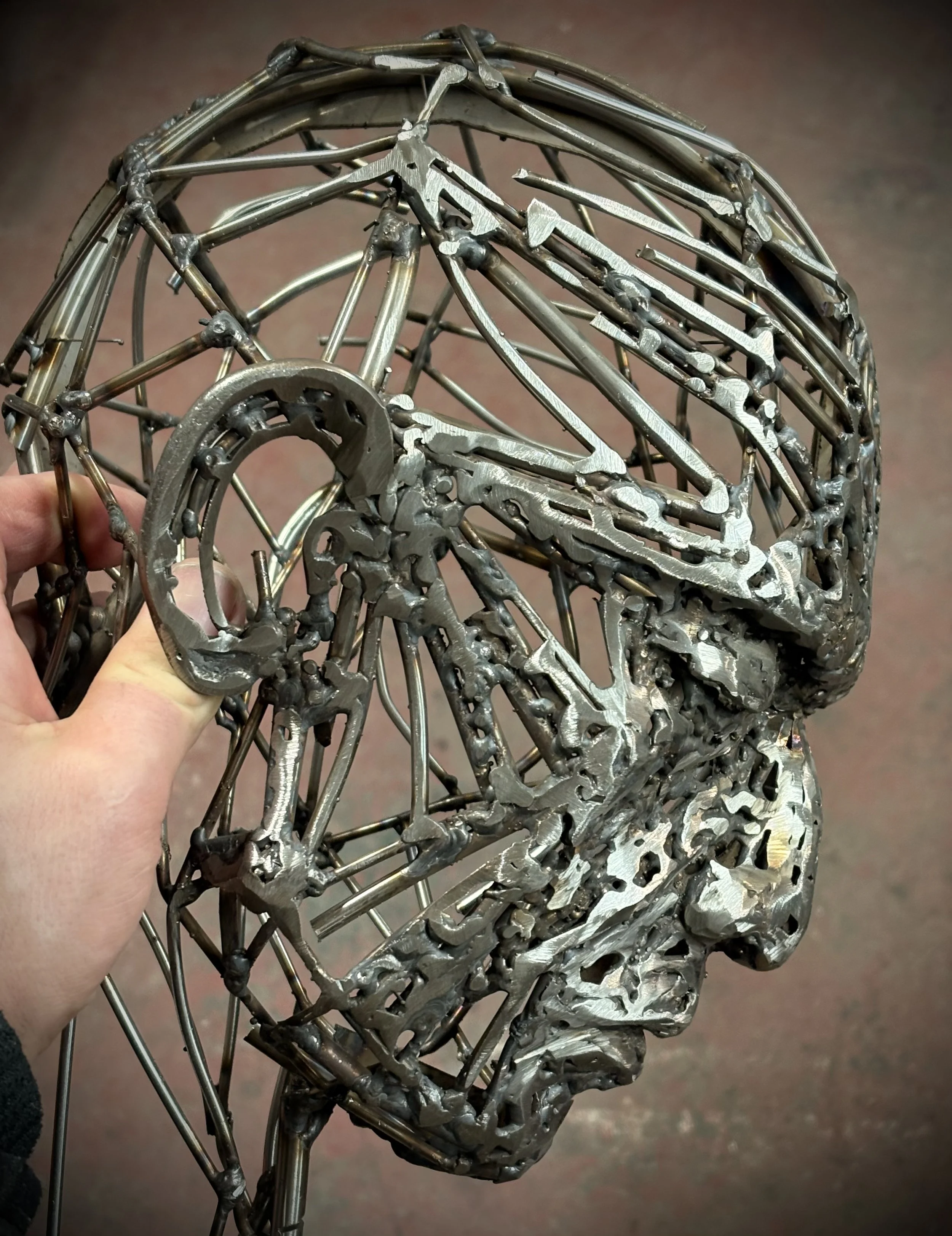
I've continued learning throughout my career — from welding and fabrication to bronze casting, portraiture and figurative sculpture. I don't see the technical side of sculpture as separate from the creative process. The better I understand a material and what it can do, the more freedom I have to push an idea.
Made in the Studio
For me, making is an important part of being a sculptor.
Much of my work begins as sketches, experiments or small studies before being developed through the material itself. In the studio, sheets and sections of metal are cut, heated, hammered, forged, welded, ground and finished by hand.
The process can be physical and sometimes unpredictable. A piece often develops through making rather than simply following a predetermined drawing.
That relationship with the material is something I value enormously.
I want a sculpture to work aesthetically, but I also care about the details that aren't always immediately noticed: how surfaces meet, the quality of a weld, the way a sculpture is supported, how it will weather, how it interacts with light and how it will sit within its surroundings.
For commissioned work, the same attention extends to the whole project — understanding the client's ideas, considering the setting, resolving scale and materials, and making sure the finished piece feels as though it belongs there.
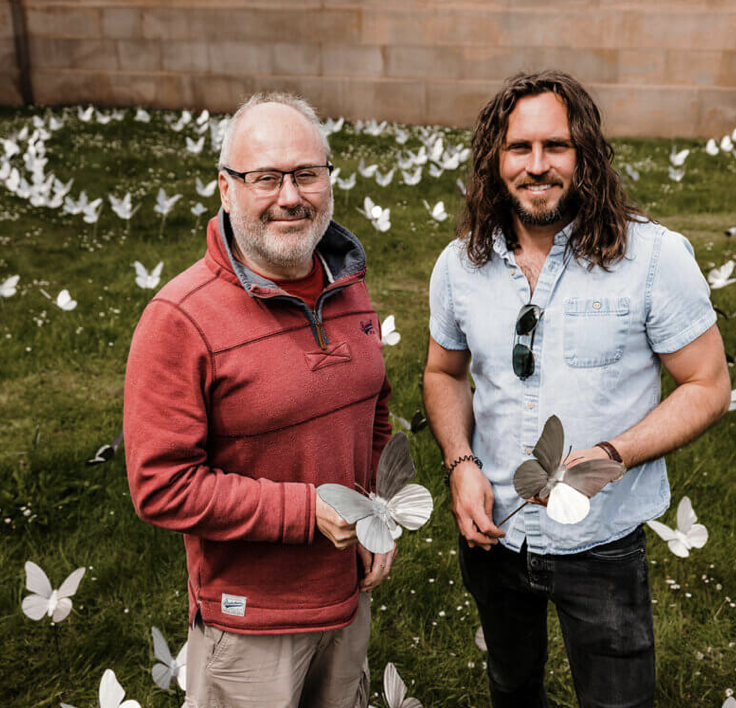
As the studio has grown, I've also been fortunate to have Marvin working alongside me. He joined during a particularly busy period following my appearance on the BBC's Home Is Where the Art Is and has since become an important part of the workshop, helping with finishing, polishing, preparation and the many practical jobs involved in producing and delivering the work.
In 2023 I moved into a much larger converted grain store at Hall Farm. It gives us the space to develop more ambitious sculpture and installations while still retaining the hands-on studio approach that has always been central to my work.
Sculpture and Commissioned Work
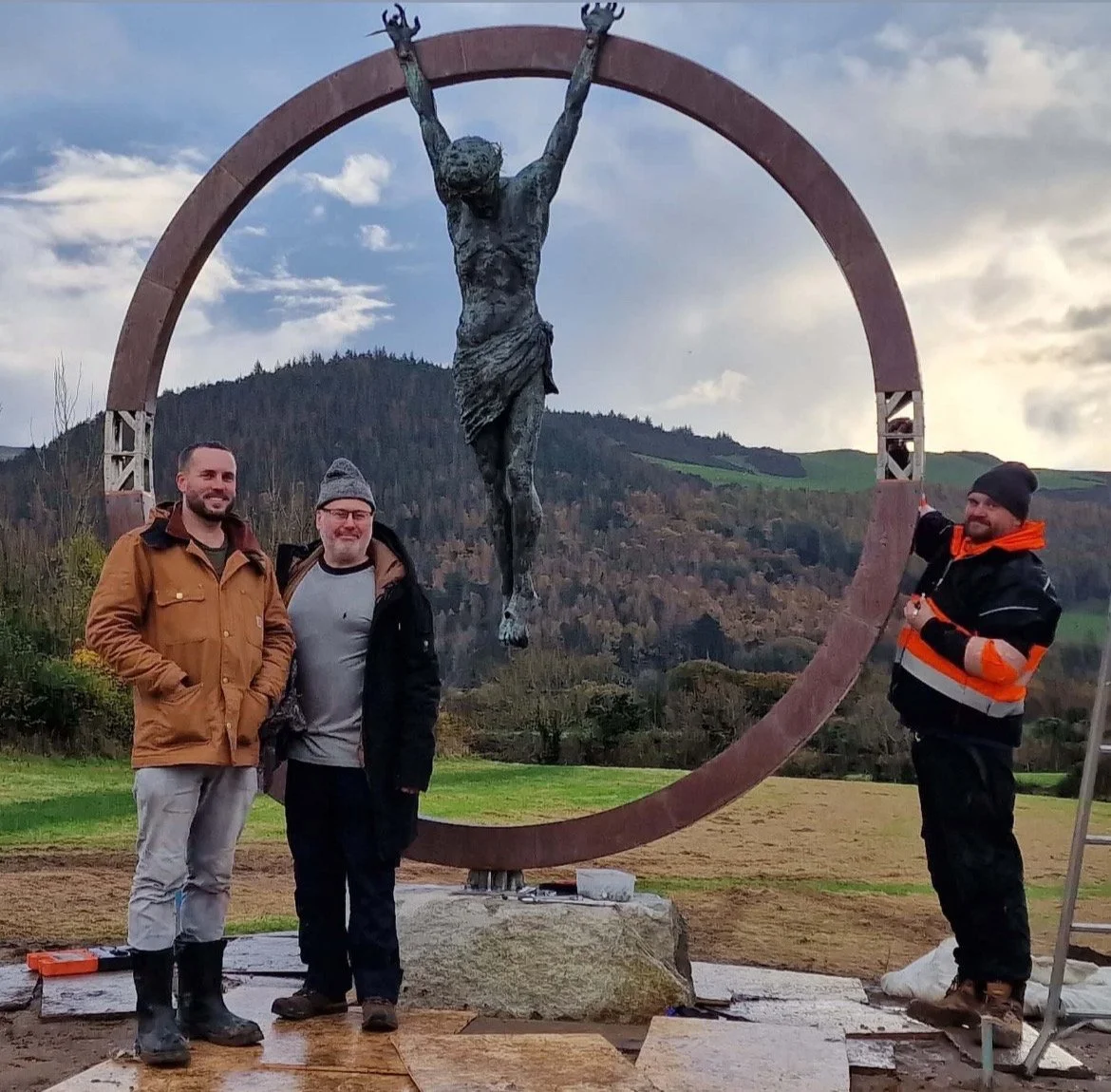
Over the past twenty years I've created sculpture at very different scales — from intimate pieces for private homes and gardens to permanent public artworks, memorials and large collaborative installations.
Increasingly, I am interested in work that responds directly to architecture and landscape.
Series such as my fish and bird studies can develop from individual sculptures into extensive wall-mounted, suspended or freestanding installations. This allows a work to be adapted to the proportions and character of a particular setting, whether that is a private residence, garden, hotel, workplace or public space.
I enjoy that relationship between sculpture and place. A successful commission should do more than fill an empty space; it should create a focal point, change the way the surroundings are experienced and give people a reason to stop and look.
I work directly with private collectors as well as architects, interior designers, art consultants, businesses, charities, councils and public organisations. Previous projects and collaborations have involved organisations including the BBC, RAF Waddington and a number of local authorities and arts organisations.
Alongside commissioned work, I continue to develop individual sculptures and new collections in the studio, some of which are available directly through the website.
Family, Landscape and Community
Away from the workshop, I live in Lincolnshire with my wife and our three not-so-little children.
The countryside around me continues to influence what I make. I'm fascinated by natural structures and repeated forms: a shoal changing direction, birds moving together through the air, the rings of a tree, layers within rock or surfaces gradually altered by weather and time.
These aren't things I necessarily try to reproduce literally. They are often starting points for thinking about movement, connection, resilience, memory and change.
Community has also remained an important part of my practice. Over the years I have delivered creative projects with schools and community groups and worked with charities on sculpture-led fundraising initiatives that have helped raise more than £250,000 for good causes.
Those projects have reinforced something I have always believed: sculpture can be much more than an object. It can carry memories, mark an important place or moment, bring people together and create an emotional connection that lasts.
Today
The studio and the scale of my work have changed enormously since those early years, but I still enjoy the same fundamental challenge: taking an idea and turning it into something tangible.
My practice continues to evolve, but nature, material and craftsmanship remain at its centre. I am currently particularly interested in movement, collective behaviour, erosion and the traces that time leaves behind, while also developing larger sculptural installations for architectural and landscape settings.
Whether I am creating an existing work or developing something completely bespoke, I want the finished sculpture to have integrity — both in the idea behind it and in the way it has been made.
Ultimately, I hope the work creates a moment of connection: with a place, a memory, another person or simply with the natural world that inspired it.
James Sutton
Contemporary sculpture and site-specific commissions in stainless steel, Corten steel, bronze, stone and mixed metals.